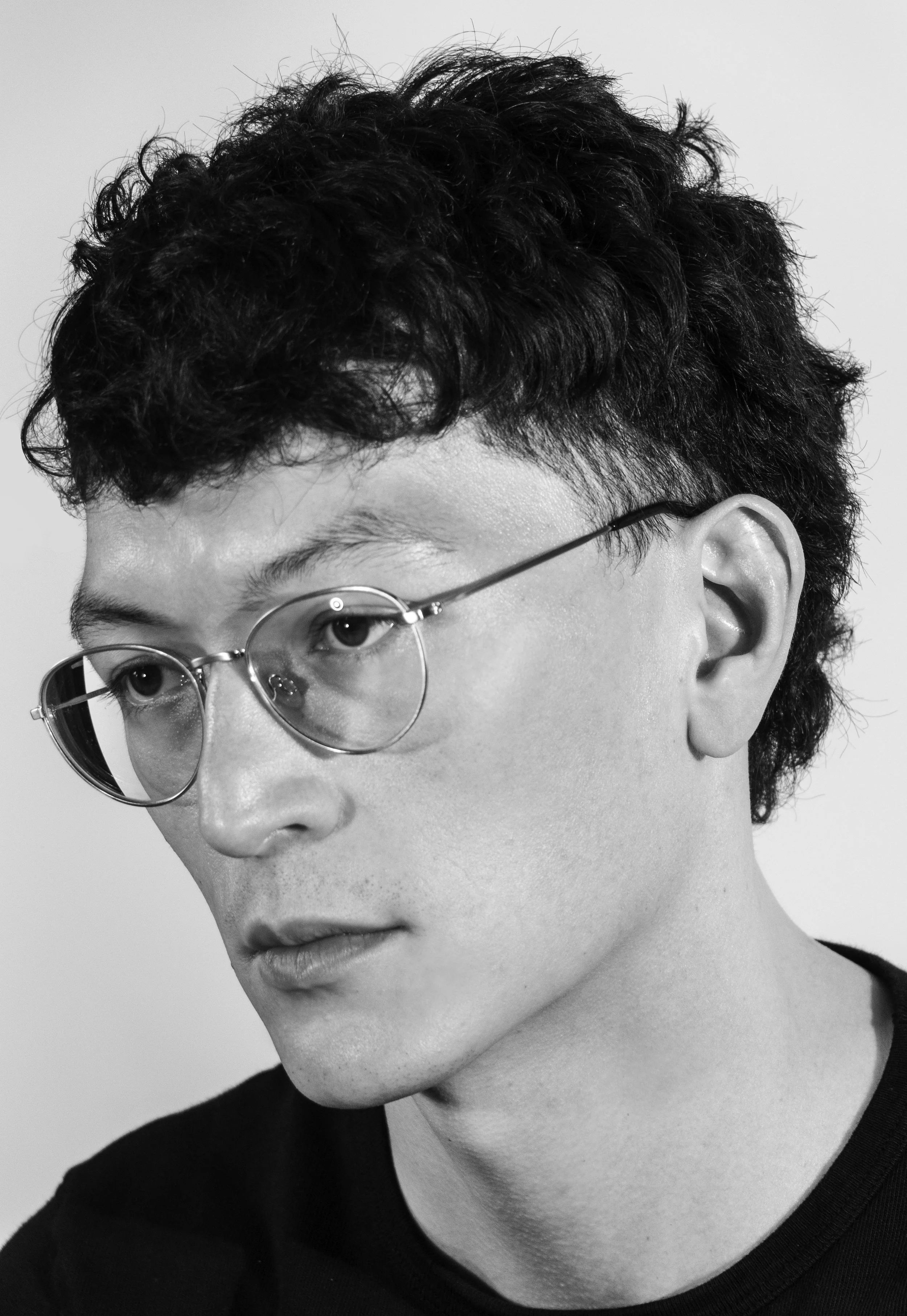
Photo by Maria Postigo-Gil
David Moy
My work stems from my discomfort within the current age of image saturation, and the resultant disorientation and fatigue within image-based culture. This relationship has been vicious, shaping behavior modification and hyper-consumerism. We have arrived at a threshold: the dominant image of our culture, AI, now has no maker's hand behind it. Now, it is an aggregate of millions of prior images, statistically averaged into something that feels familiar without belonging to experience. Through my output of printed media, I question the compounding nature of these modes by materially challenging the process of printing. By forming images, videos, and phrases that seek our attention, I revise their methods of control through a material suspension within a printing process’ entropy.
Images are sticky; they inform us and we inform them. They are near-perfect reflections, not the real thing. A pipe is not a pipe. A painting or photograph preserves something the computational image cannot: a material trace of contact. Through optimization and high-efficiency standards, images now live pervasively among us as something faster, stronger, and shorter than the media that came before, severing that trace of contact entirely. This produces recognition without origin, sensation without a source. The result is a mass psychological confusion, an imaginary response with no anchor. Images have the power to progress culture but also to manipulate it. Images supplant memory, which in turn supplants history, furthermore, shapes reality. I make images to question images. This staple of media "wounds and seduces me."
I utilize current digital printing processes to actualize the work; by using the same technology, I revert their powers of reproduction to suit my needs of negation, while forcing these systems to participate in their own critique. Through processes of aggregation, obfuscation, and erasure, I reinsert what the computational image has evacuated: the trace of a body, the evidence of a decision. The picture plane, degraded, overworked, or worn still remains a place where contact occurred. I leave behind a document that reflects on our relationship to images as viewers, in an effort to question our own presumptions of people, places, and things.
I insist on haptic visuality. The stacking, bleeding, and erasure create a surface that resists optical sovereignty. I ask the viewer's eye to slow down, to move across rather than through, to feel the image as a material thing with a surface history rather than a transparent container of content; to question image’s original power. I continue to negotiate what to believe at any moment, when facts become obscured from multiple sources, and how to move forward with the weight of previous afterimages in contrast to the anxieties of future forecasts. The author-less image has made the human absent from the picture's origin, so, the search for the human in the mirrored funhouse becomes not a metaphor but a necessity.
David Moy (Pittsburgh PA) received a BFA from Tyler School of Art in Philadelphia and a MFA from Hunter College in New York City. Moy has exhibited in New York, Los Angeles, London, Philadelphia, Brussels and France.
david.moy.print(at)gmail.com